Homelessness
The Cuckoo's CallingHomelessness is part of the history shared by Lula Landry and Rochelle Onifade, though the evidence presents their experiences differently: Lula’s is a troubled episode in her adolescence, while Rochelle’s housing remains uncertain after she leaves a hostel. The novel places these circumstances beside the assumptions made about them, showing how social vulnerability can shape the credibility granted to a person and the explanations accepted for what happened.
Lula’s history
Lula’s adolescence included running away from school, a suicide attempt, and a period of living rough. She was later found by police in a squat. An online fan site further claimed that she had briefly supported herself through prostitution, but this is presented as an unverified assertion rather than established fact. Her history therefore reaches the reader through a mixture of reported events and internet speculation, a distinction that matters in a story saturated with public claims about her life.
After this period, Lula was sectioned under the Mental Health Act and diagnosed with bipolar disorder. The novel’s account of her homelessness is embedded in a broader history of distress, but does not make homelessness itself a diagnosis or a complete explanation of her later actions. The sequence instead shows how personal crisis, institutional intervention, and a rapidly changing public life intersected in her early years.
Rochelle and the hostel
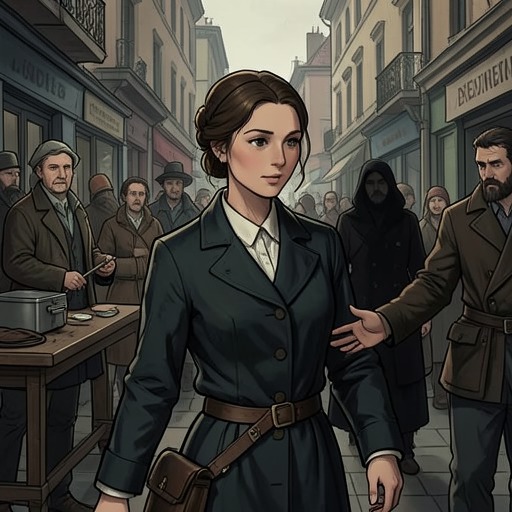
When Strike seeks information about Rochelle, he visits St. Elmo’s Hostel for the Homeless, a red-brick institution set behind a concrete flyover. Its chipped entrance, security buzzer, camera, locked doors, and guarded reception distinguish it sharply from the more affluent surroundings associated with Lula. The setting makes housing insecurity concrete without turning the hostel into a refuge that resolves it: staff say Rochelle has come and gone several times, and that she left weeks or perhaps months earlier.
A staff member cannot say where Rochelle went, only that she may be sleeping rough again. He describes her as difficult and mentions mental-health problems, then suggests that Carrianne might know more. This exchange offers no confirmed account of Rochelle’s present circumstances. Instead, it leaves her whereabouts unsettled and shows how a person’s repeated movement between a hostel and rough sleeping can become the basis for an institutional shorthand about character.
Social judgment and the investigation
The novel connects housing insecurity to the handling of evidence and credibility. The detective responsible for Lula’s case, Strike learns, was convinced from the outset that she had died by suicide because she was taking lithium, overlooking matters that others had begun to notice. In this context, Lula’s history of mental-health crisis risks becoming a ready-made explanation rather than one element to weigh against the evidence.
Other judgments in the investigation follow a similarly reductive pattern. Eric Wardle tells Strike that Derrick Wilson accepted money from John Bristow to speak with him, yet Wilson insists that Lula killed herself and treats the payment as inconsequential. Later, when Strike asks about Lula’s missing bag, Carver supposes she left it in a squat and argues that people who die by suicide do not usually pack a bag to jump. Strike rejects the premise, saying he does not think she jumped. The exchange reveals how an assumed history of homelessness can be used to fill gaps in the evidence—and how an assumption about suicide can make that inference seem sufficient.
Across Lula’s past and Rochelle’s uncertain whereabouts, homelessness is not a single, self-contained episode with a neat resolution. It is a condition recalled, repeated, or presumed by others, and its presence in the investigation illustrates the danger of letting poverty and mental-health difficulties stand in for proof. The novel keeps the distinction between confirmed information and rumor visible, even as its characters try to build a coherent account from both.